


As a supplier of LED landscape path lights, I've witnessed firsthand the growing interest in energy - efficient lighting solutions. In today's world, where sustainability and cost - effectiveness are at the forefront of consumers' minds, the question "Are LED landscape path lights energy - efficient?" is more relevant than ever. In this blog post, I'll delve into the science behind LED technology, compare it with traditional lighting options, and provide real - world examples to illustrate the energy - saving benefits of LED landscape path lights.
The Science of LED Lighting
To understand why LED landscape path lights are energy - efficient, we first need to understand how they work. LED stands for Light - Emitting Diode. Unlike traditional incandescent bulbs, which produce light by heating a filament until it glows, LEDs generate light through a process called electroluminescence. When an electric current passes through a semiconductor material in the LED, it releases photons, which are particles of light.
This process is far more efficient than that of incandescent bulbs. Incandescent bulbs waste a significant amount of energy as heat. In fact, up to 90% of the energy consumed by an incandescent bulb is converted into heat, with only about 10% being used to produce light. On the other hand, LEDs are much cooler to the touch and convert a much higher percentage of electrical energy into light. This means that they can produce the same amount of light as an incandescent bulb using far less energy.
Comparison with Traditional Lighting Options
Let's compare LED landscape path lights with two common traditional lighting options: incandescent and halogen bulbs.
Incandescent Bulbs
As mentioned earlier, incandescent bulbs are extremely inefficient. They have a relatively short lifespan, usually around 1,000 hours. This means that not only do they consume a large amount of energy during their operation, but they also need to be replaced frequently. For landscape path lighting, where multiple bulbs are often used, this can result in high energy costs and ongoing replacement expenses.
Halogen Bulbs
Halogen bulbs are a type of incandescent bulb that uses a halogen gas to increase efficiency and lifespan. They are slightly more efficient than regular incandescent bulbs, but still far less efficient than LEDs. Halogen bulbs typically last around 2,000 - 4,000 hours, and they also produce a significant amount of heat. This heat not only wastes energy but can also pose a fire hazard, especially in outdoor settings where there may be dry vegetation nearby.
In contrast, LED landscape path lights can last up to 50,000 hours or more. This long lifespan means fewer replacements, reducing both the cost of bulbs and the environmental impact associated with manufacturing and disposing of them. Additionally, LEDs consume up to 80% less energy than incandescent bulbs and 50% less energy than halogen bulbs while providing the same level of illumination.

Real - World Energy Savings
To illustrate the energy - saving potential of LED landscape path lights, let's consider a real - world example. Suppose you have a garden with 20 landscape path lights. If you were using incandescent bulbs, each consuming 60 watts of power, and you left them on for 6 hours a day, 365 days a year, the total energy consumption would be:
[20\times60\text{ watts}\times6\text{ hours}\times365\text{ days}=2,628,000\text{ watt - hours or }2,628\text{ kilowatt - hours}]
Assuming an electricity cost of $0.15 per kilowatt - hour, the annual energy cost would be ($2,628\times0.15=$394.2)
Now, if you were to replace those incandescent bulbs with LED landscape path lights, each consuming only 12 watts of power, the total energy consumption would be:
[20\times12\text{ watts}\times6\text{ hours}\times365\text{ days}=525,600\text{ watt - hours or }525.6\text{ kilowatt - hours}]
The annual energy cost would then be ($525.6\times0.15 = $78.84)
This represents a savings of ($394.2-$78.84=$315.36) per year. Over the lifespan of the LED lights, the savings can be substantial.
Other Benefits of LED Landscape Path Lights
In addition to energy efficiency, LED landscape path lights offer several other benefits.
Durability
LEDs are solid - state lighting devices, which means they have no fragile filaments or glass components. This makes them more resistant to shock, vibration, and extreme temperatures. They are ideal for outdoor use, where they may be exposed to harsh weather conditions and physical impacts.
Design Flexibility
LEDs come in a wide range of colors and can be easily dimmed or controlled. This allows for creative and customizable lighting designs. For example, you can use different colors to create a festive atmosphere or use dimming to save even more energy during off - peak hours.
Low Maintenance
Thanks to their long lifespan, LED landscape path lights require very little maintenance. You don't have to worry about frequently replacing bulbs, which is especially convenient for large outdoor areas.
Our Product Range
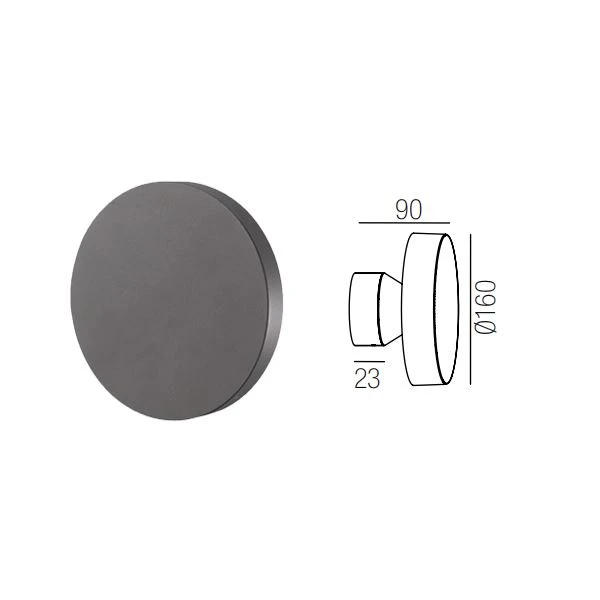
At our company, we offer a wide range of LED landscape path lights to suit different needs and preferences. In addition to our standard path lights, we also have other high - quality LED lighting products, such as LED Architectural Bollard Light, Wall Recessed Stair Lights, and Round Decorative Outdoor Wall Light. These products are not only energy - efficient but also designed to enhance the aesthetic appeal of your outdoor space.
Conclusion
In conclusion, LED landscape path lights are highly energy - efficient. Their advanced technology, long lifespan, and low energy consumption make them a superior choice compared to traditional lighting options. By choosing LED landscape path lights, you can significantly reduce your energy costs, lower your environmental impact, and enjoy a beautiful and well - lit outdoor space for years to come.
If you're interested in learning more about our LED landscape path lights or other lighting products, or if you're ready to start a procurement discussion, please don't hesitate to reach out. We're here to help you find the perfect lighting solutions for your needs.
References
- "LED Lighting Basics," U.S. Department of Energy.
- "Energy - Efficient Lighting Choices," National Renewable Energy Laboratory.
- "Comparing LED, Halogen, and Incandescent Lighting," Lighting Research Center.


